 翻轉箭頭的光學實驗-(光的折射)
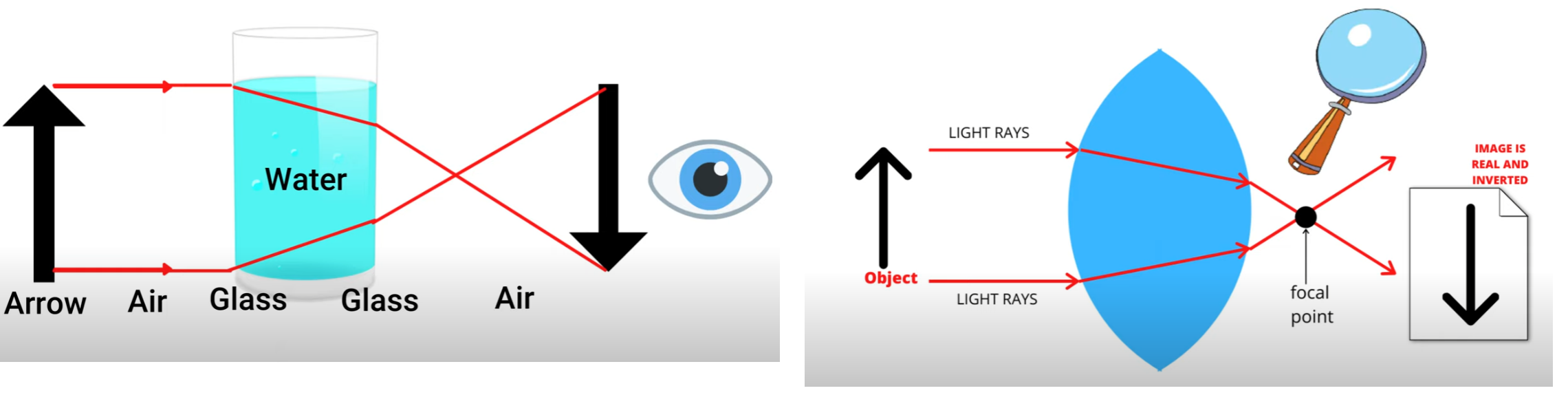
| 小科學家們大家好。 今天我們將要做一個非常巧妙的科學實驗,使用您手邊可能已有的簡單材料即可輕鬆完成實驗。 您所需要的只是用記號筆或筆將水罐、白紙和透明的空旅遊玻璃貼上膠帶。 首先用記號筆在一張白紙上畫兩個朝向相同方向的水平箭頭,然後用膠帶將紙貼在牆壁或任何垂直表面上,或者只是叫人把紙舉起來。 現在將空玻璃罐放在箭頭前面。 透過玻璃觀察並做出觀察 箭頭現在如何出現? 慢慢地將水倒入空玻璃容器中,直到水通過下方的箭頭。 箭頭會發生什麼事? 您可以透過將玻璃移近或遠離箭頭來進一步進行實驗,看看影像會發生什麼情況。 你不會發瘋,也不會發現自己像愛麗絲夢遊仙境一樣盯著指向相反方向的箭頭。 事實上,您剛剛演示了一個稱為折射的物理概念:光的彎曲。 總結背後的科學 在我們剛剛做的折射實驗中,光線到達我們的眼睛或在這個 如果我們的相機來自箭頭。 如您所知,光線沿著直線傳播,但是當您將裝有水的玻璃杯放在眼睛和箭頭之間時,箭頭發出的光會彎曲。 光線從箭頭出發,穿過空氣,穿過玻璃,穿過水,再次穿過玻璃,然後再次穿過空氣,最後到達我們的眼睛。 一旦我們將水添加到玻璃中,整個玻璃就會表現得像凸透鏡,就像放大鏡中的那種類型。 透鏡或玻璃實際上會將光線折射兩次:一次在入口處,一次在出口處。 凸透鏡將光線彎曲到焦點,這是來自物體的光線穿過的點。 因此,該物件(或在本例中為箭頭)看起來是翻轉的,所以現在就是這樣。 請隨時觀看我關於折射和其他很酷的折射實驗的完整影片。 | 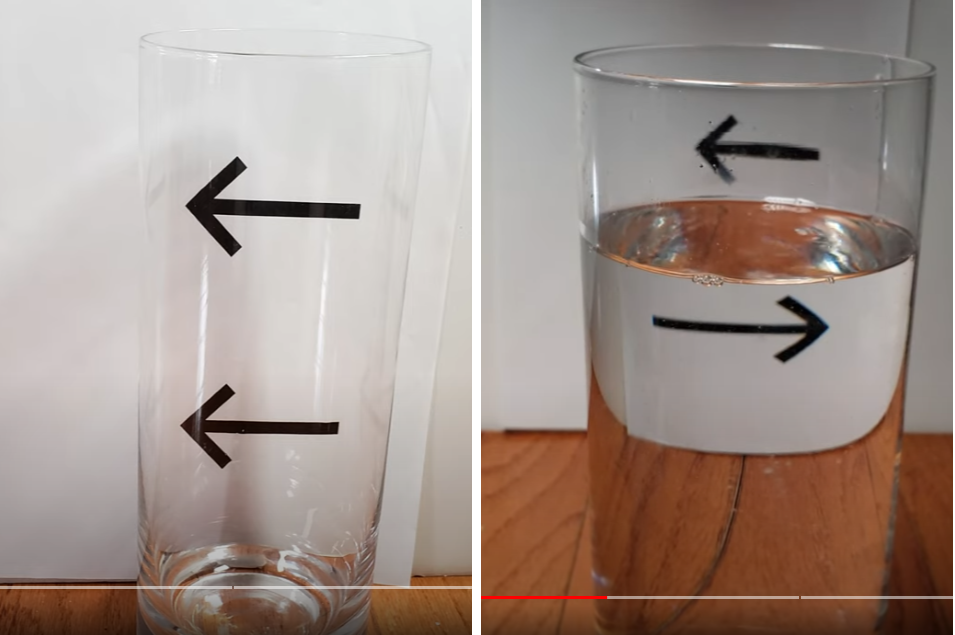 |
Reverse Arrow Science Experiment- (REFRACTION OF LIGHT)
Well, hello little scientists. Today we are going to be doing a really neat science experiment which is so easy to do using simple materials that you may already have on hand. All you will need are tape a marker or pen jug of water a white sheet of paper and a clear empty tour glass. First using your marker pen draw two horizontal arrows facing the same direction on a piece of white paper and using some tape stick the paper onto a wall or any vertical surface or just call on someone to hold the piece of paper up. Now place the empty glass jar in front of the arrows. Look through the glass and make your observations How do the arrows appear now? Slowly pour water into the empty glass container until it passes the lower arrow. What happens to the arrow? You can experiment further by moving the glass closer or further away from the arrow and see what happens to the image. You aren't going crazy and you haven't found yourself with alice in wonderland staring at an arrow pointing in the opposite direction. In fact you have just demonstrated a physics concept called refraction: the bending of light.The science behind Summary
In the refraction experiment we just did, the light reach in our eye or in this case our camera is coming from the arrow. As you know light travels in straight lines, but when you place a glass with water in between your eyes and the arrow, the light from the arrow bends. The light travels from the arrow through the air through the glass through the water through the glass again and then through the air again before reaching our eyes. Once we add the water to the glass the whole glass behaves like a convex lens, you know, like the type found in a magnifying glass. The lens or the glass actually refracts the light twice: once on entry and once on exit. Convex lenses bend light to a focal point this is the point at which a light from an object crosses. Therefore the object or in this case the arrow appears flipped so that's it for now. please feel free to check out my full video on refraction and other cool refraction experiments.授課教師
陳永忠 ycchen@thu.edu.tw